


AuraDrama: Short Drama HD
HOANG PHUONG TECHNICAL SERVICES AND TRADIING JSC
I tried AuraDrama: Short Drama HD as a quick entertainment app rather than treating it like a full streaming replacement. Its basic promise is easy to understand: short dramas presented in HD, with fresh episodes intended to keep the catalog moving. That makes it most appealing when I want a compact story during a break, while waiting for an appointment, or before bed when I do not want to commit to a long film or series.
The app sits in the entertainment category and is free to install. That matters because the main decision is not whether the download is expensive, but whether the viewing experience is worth giving space to on a phone. The developer is HOANG PHUONG TECHNICAL SERVICES AND TRADIING JSC, and the app has reached over one hundred thousand installs. Those figures suggest that it has found an audience, although its average score of three out of five from roughly sixty ratings is a reason to approach it with realistic expectations rather than assuming universal approval.
How AuraDrama fits short-form viewing
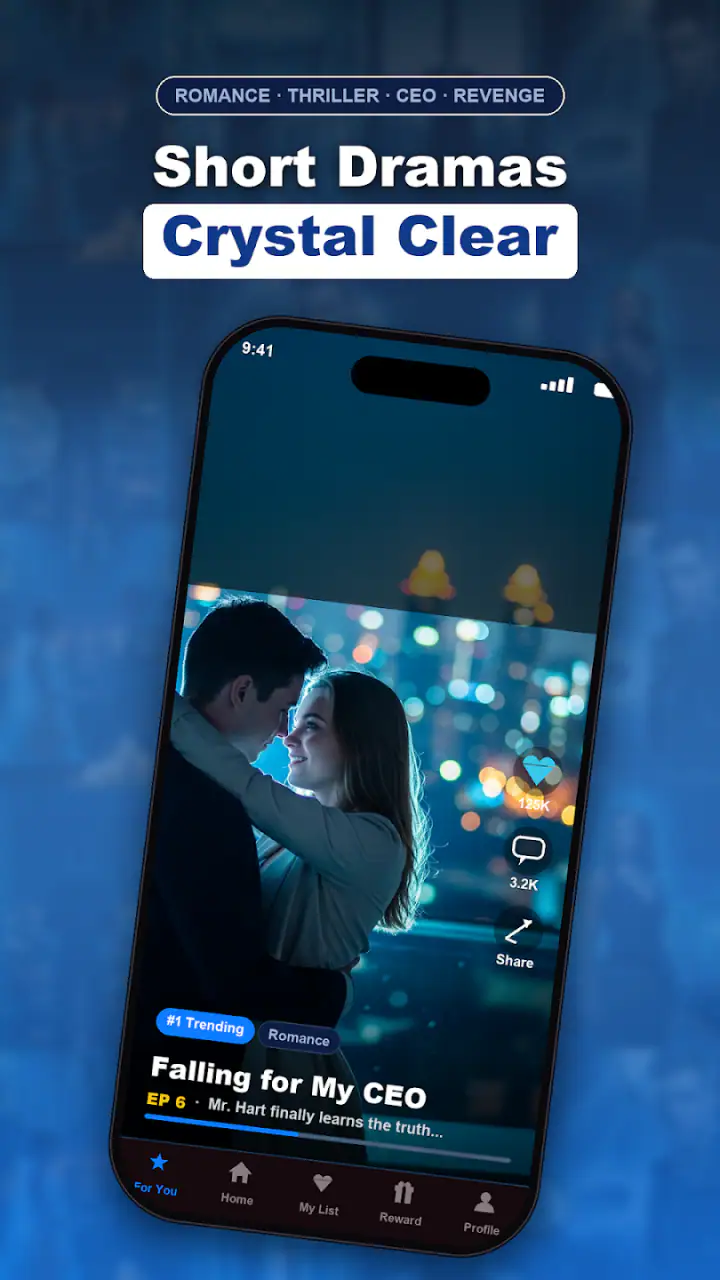
The strongest idea behind this app is its format. Short dramas are easier to fit into ordinary routines than traditional television episodes. I can open the app with only a few spare minutes, watch part of a story, and return later without planning an entire evening around it. That convenience is more important than it may sound: a compact drama app competes less with a movie night and more with idle scrolling, social clips, and the habit of opening several apps without finishing anything.
The store description presents crisp HD viewing and new episodes every day. I would read that as a reason to check in regularly, not as a guarantee that every title will suit my taste. A daily release rhythm can make the service feel active, but it also changes how I use it. Instead of searching for one large library and disappearing for hours, I would treat AuraDrama as a small entertainment routine: browse, choose a short story, and decide whether the next episode deserves my attention.
That distinction helps set expectations. This is not the right choice for someone looking primarily for long-form cinema, major television franchises, or a broad replacement for a general streaming platform. Its appeal is narrower and more immediate. If I enjoy cliffhangers, fast-moving plots, and serialized stories designed for phone viewing, the concept makes sense. If I prefer carefully paced films or complete seasons that can be watched in one sitting, the short-drama format may feel too compressed.
Related News

Why WhatsApp Messenger Still Makes Everyday Communication Feel Easy

Jurassic World: The Game Is the Better Dino Tycoon for Strategic Players

Threads in Real Life: Who Should Join, Lurk, or Leave

How SHEIN Turned Shopping Into an Endless Content Feed

How to Make Fortnite Feel Smarter on Mobile

Should You Switch to Microsoft Outlook on Mobile?
What the free price really means
The confirmed price is free, so I can evaluate the app without treating it as a purchase decision. That is a genuine advantage for curious viewers: installing it does not require committing money before discovering whether the stories, presentation, and episode rhythm work for them. It also makes AuraDrama easier to recommend for occasional use, especially when someone wants a lightweight entertainment option rather than another paid subscription.
At the same time, “free” should be understood carefully. It tells me that the app itself is available without a listed purchase price; it does not automatically tell me how every viewing detail behaves inside the application. I would therefore avoid assuming that all possible content arrangements, interruptions, or access rules are identical across the catalog. The sensible approach is to install it, inspect the first few viewing choices, and decide whether the experience feels comfortable before building a daily habit around it.
For me, the lack of an upfront cost changes the standard. A paid streaming service must justify a recurring expense through breadth, reliability, and depth. AuraDrama only needs to provide enough enjoyable short stories to earn repeat visits. That is a lower hurdle, but it also means the app must make discovery quick. If browsing takes too much effort or the available dramas do not match my preferences, free access alone will not make it valuable.
Gallery
A realistic everyday use case
Imagine finishing lunch with twelve minutes before the next task. A conventional episode may be too long, while a social feed can easily turn into unplanned scrolling. This is where I see AuraDrama fitting naturally. I would open it, choose a short drama, watch until the next stopping point, and close the app when the break ends. The format gives that spare time a beginning and an ending instead of letting it dissolve into random clips.
Another useful situation is travel without a strong connection to a television or tablet. A phone-focused drama app is more practical than carrying a larger screen, although I would still consider the conditions of the journey and avoid assuming that every part of the experience will be equally convenient offline. For a commute, a waiting room, or a quiet evening when I want something lighter than a feature film, the short structure is the main benefit.
There is also a social use case. Short cliffhanger dramas are easy to discuss with a friend because each viewing session produces a small piece of the story. I could recommend a particular series after watching only a few episodes instead of asking someone to invest several hours first. That makes the app suitable for casual shared discovery, even if it is unlikely to replace a more established service for serious group viewing.
Practical ways to get more from the app
My first tip would be to judge a drama by several episodes rather than by its opening moment alone. Short-form storytelling often introduces conflict quickly, and an opening scene may be designed mainly to create curiosity. Watching a little further helps me decide whether the pacing feels satisfying or merely rushed. This is a more useful test than judging the app from its icon, summary, or first thumbnail.
My second tip is to use the daily-release idea as a boundary rather than an obligation. New episodes can encourage a pleasant routine, but they can also create the feeling that I must keep checking the app. I would choose a specific time for viewing and stop when the session no longer feels relaxing. The app works best as a small part of my entertainment mix, not as something that controls my attention throughout the day.
A third consideration is screen comfort. HD presentation can make a drama easier to follow on a modern phone, but clarity is only useful if the text, faces, and fast cuts remain comfortable at the size I normally hold the device. I would test the app in the lighting where I actually plan to watch it. A title that looks fine in a bright room may feel less convenient late at night, and short episodes do not remove the need for sensible viewing habits.
I would also keep expectations flexible when choosing a title. Rather than searching for one perfect series immediately, I would sample different stories and note which pacing, themes, and episode lengths hold my attention. This approach is especially helpful because the app’s overall rating is modest. A mixed average does not prove that the service is poor, but it does suggest that personal taste will matter more than the headline promise.
Where the experience may fall short
The clearest limitation is that a short-drama service can feel narrow beside a conventional streaming app. Larger alternatives usually offer more established catalogs, broader genres, and a familiar way to continue long episodes. AuraDrama’s focused format is an advantage when I want something quick, but it becomes a weakness when I am searching for a specific actor, a full-length production, or a story with room for slow character development.
Daily additions can also create uneven discovery. A frequently refreshed catalog sounds useful, yet fresh content is not automatically the same as content I want to watch. If the app’s selection does not match my mood, the release schedule will not solve that problem. I would value a clear, low-effort route from opening the app to finding a suitable drama; otherwise, the free access may be offset by the time spent browsing.
The rating of three out of five from around sixty ratings deserves a balanced reading. It is not enough to identify one universal flaw, but it does warn me not to assume that every user will find the app polished or satisfying. I would use that signal as a prompt for a personal trial. Since the app costs nothing to try, the most practical test is whether the first few dramas play comfortably and whether I genuinely want to return the next day.
Device compatibility is another basic checkpoint. The current version is 1.0.2 and requires Android 7.0 or later, so owners of older Android phones should check their system before expecting to install it. For supported devices, the version information gives me a useful starting point, but I would still keep the application updated through the normal store process when updates are offered. A short-drama app depends heavily on smooth playback and readable presentation, so an outdated setup may affect the impression I form.
Who is likely to find real value?
I think AuraDrama is best suited to viewers who already enjoy serialized mobile fiction and want entertainment in small portions. It is particularly reasonable for people who watch on a phone, prefer quick emotional hooks, and like returning to a story frequently instead of waiting for a long free evening. Because the app is free, it also works for users who want to experiment without adding another paid service to their monthly spending.
It may also suit families looking for content marked for Everyone, although I would still make viewing choices based on the actual story and the age of the person watching. An Everyone rating is a helpful broad classification, not a substitute for a parent’s judgment about themes or individual suitability. The compact format can be convenient for shared devices, but I would not assume that every drama will appeal equally to every age group.
I would recommend skipping it if your priority is a deep, dependable library of mainstream films and television. In that case, a traditional streaming platform is likely to be the better use of your time, especially if you already pay for one and want to watch complete episodes without adapting to short-form pacing. I would also skip it if you dislike cliffhangers or feel frustrated when a story moves quickly to fit a mobile format.
People with limited patience for browsing should take a cautious approach as well. The app’s value depends on finding dramas that connect with personal taste, and no free catalog can guarantee that the first selection will be right. I would install it only if I am willing to sample a few options rather than expecting an immediately perfect recommendation system.
My final recommendation
The best reason to try AuraDrama is its low-risk, short-session format. It offers a free way to explore HD short dramas and follow new episodes as they appear, which is enough to make it worthwhile for casual mobile viewing. I can see it filling the gap between random scrolling and a full television commitment, particularly during brief breaks or relaxed phone time.
My recommendation is therefore positive but selective. I would try it if I wanted short serialized entertainment and did not need a major streaming catalog. I would not install it expecting a replacement for established film and television services, nor would I assume that the daily release promise guarantees a steady supply of stories I personally enjoy. The modest average rating reinforces that measured approach.
In practical terms, I would give the app a short trial, test whether the first dramas hold my attention, and pay attention to how naturally it fits into my routine. If I found myself returning because the episodes were easy to start and satisfying to finish, the free price would make AuraDrama a useful addition. If the pacing, selection, or browsing experience felt repetitive, there would be little reason to force it into my entertainment habits.
For Android users on version 7.0 or newer, the decision is simple: try it when short dramas are exactly what you want, and skip it when you are looking for long-form variety. That is where I place AuraDrama: Short Drama HD after reviewing its purpose and trade-offs: a convenient free experiment for bite-sized drama fans, but not a universal answer for every kind of viewer.
FAQs for AuraDrama: Short Drama HD
What is AuraDrama: Short Drama HD?
AuraDrama: Short Drama HD is a mobile entertainment app focused on short-form dramatic video series. Episodes are designed to be watched quickly, making the app suitable for users who enjoy romance, family conflict, suspense, and emotional storytelling in compact installments. Before downloading, keep in mind that the available catalog, episode length, subtitles, and language options may vary depending on your region and the version of the application.
Is AuraDrama: Short Drama HD free to download and use?
The app may be available to download at no initial cost, but free access does not necessarily mean that every episode or feature is completely free. Some content can be supported by advertisements, limited viewing opportunities, virtual credits, subscriptions, or in-app purchases. We recommend checking the store listing and the payment terms inside the app before starting a series, particularly if children or other family members use the device.
Does AuraDrama: Short Drama HD require an internet connection?
AuraDrama: Short Drama HD is primarily intended for streaming, so a stable internet connection is generally needed to browse the catalog and watch episodes. Playback quality and data usage can depend on your network and video settings. If the app offers downloads for offline viewing, availability may differ by title, account type, or location. Using Wi-Fi is advisable when watching several episodes to avoid consuming mobile data.
What kind of content and viewing experience does the app provide?
The app is aimed at viewers who prefer fast-paced short dramas with cliffhangers and continuing storylines rather than long, traditional television episodes. Its content may include mature themes such as relationship problems, betrayal, family disputes, or intense emotional situations. Because the catalog can change, users should review individual descriptions, age ratings, warnings, and language information before watching, especially when sharing the app with younger viewers.
Is AuraDrama: Short Drama HD safe to install?
You should download AuraDrama: Short Drama HD only from an official Android or iOS store and verify the publisher name, ratings, recent reviews, requested permissions, and privacy information before installation. As with any streaming application, review its subscription and cancellation policies carefully, and avoid entering payment details unless you understand the charges. Keep your operating system updated and use a strong account password for additional protection.
Pros
- Short episodes make it easy to watch during quick breaks.
- HD video quality provides a clear and enjoyable viewing experience.
- Frequent story updates can keep the content feeling fresh.
- The app offers a convenient way to discover dramatic mini-series.
- Simple navigation makes browsing shows and episodes straightforward.
Cons
- Some episodes may end on cliffhangers that encourage continued viewing.
- The selection may feel limited if you prefer full-length television series.
- Video streaming can use significant mobile data without Wi-Fi.
- Content availability may vary by region or change over time.
- Some stories may rely on familiar drama clichés and predictable twists.


